Early Years Foundation Stage
Our Early Years Vision and Values
In the Early Years at High Meadow, we believe that the foundations of a child’s lifelong learning journey are built in the earliest years. We are passionate about providing a rich, play-based curriculum that nurtures curiosity, creativity, independence, and joy. Our vision is rooted in a deep respect for children as competent and capable learners, whose ideas, interests, and dispositions drive meaningful learning.
We understand that birth to seven is a unique and vital stage of development, requiring an approach distinct from other year groups. In our setting, relationships are at the heart of everything we do. We create emotionally safe spaces where children are known, valued, and inspired to take risks, solve problems, and make sense of the world around them.
Our values – known across the school as our Learning Powers - such as kindness, bravery, resilience, independence, creativity, and hard work - are not just words, but embedded behaviours we nurture every day. Through warm interactions, active learning, and repeated opportunities to revisit and embed ideas, we support children to develop strong learning behaviours and positive dispositions that will serve them for life.
We are a team committed to continual improvement, reflective practice, and a shared belief that learning is not compartmentalised - it is interconnected, meaningful, and led by the child. Our practice is grounded in the Characteristics of Effective Learning and enriched by high-quality adult guidance, environments that provoke thinking, and strong partnerships with families.
Our Early Years vision is to provide a high-quality, enquiry-based education that prepares every child not just for Year 1, but for a lifetime of learning and flourishing.
Our Early Years Intent and Approach
The time spent in EYFS should be happy, exciting and foster a lifelong love of learning. We aim to provide an environment whereby all children will grow into independent, caring and confident individuals, aware of their own abilities and talents. We aim to promote natural curiosity and encourage children to be inquisitive about the world around them, ask questions and seek out the answers. We support children to develop the Characteristics of Effective Learning, encouraging them to play and explore, be active learners, and think creatively and critically.
Children learn best when they are provided with a balance of adult-guided and child-led experiences. In the Early Years at High Meadow, we ensure that both structured activities led by adults and opportunities for children to explore and learn independently are key parts of their learning journey. We believe that these early years in Nursery and Reception are crucial in laying the foundations for all future learning, supporting children’s development in every area, from social and emotional growth to academic skills.
Our curriculum intent for the Early Years is to provide a high-quality educational experience that lays a strong foundation for children's future learning and development. Our aim is to create a nurturing and stimulating environment where children feel safe, happy, and motivated to explore, discover, and learn in a variety of ways. This approach is outlined in more detail in our ‘What Matters Most in our Early Years Approach,’ which covers the key principles guiding our practice.
Our curriculum is carefully mapped from Nursery to Reception, ensuring progression across all seven areas of learning and a clear connection to our school’s wider curriculum design.
What Matters Most in our Early Years Approach
1. A Holistic Development
We believe in fostering holistic development in young learners, focusing on their physical, social, emotional, and cognitive growth. Our curriculum is designed to support children in developing their self-confidence, independence, resilience, and positive relationships with peers and adults. By nurturing these areas, we provide a solid foundation for lifelong learning.
2. Curriculum Aligned to the EYFS and Progression
We are committed to helping children achieve the Early Learning Goals outlined in the Early Years Foundation Stage (EYFS) framework. Our curriculum is carefully planned around the seven areas of learning and development: communication and language, physical development, personal, social and emotional development, literacy, mathematics, understanding the world, and expressive arts and design. Skilled practitioners ensure that learning is sequenced to support progression through the key milestones of the EYFS, and children are given ample opportunities to revisit and deepen their understanding. High-quality interactions with adults and peers ensure children can build upon prior knowledge and progress in a meaningful way, allowing them to reach their full potential.
3. Purposeful Play and Direct Teaching
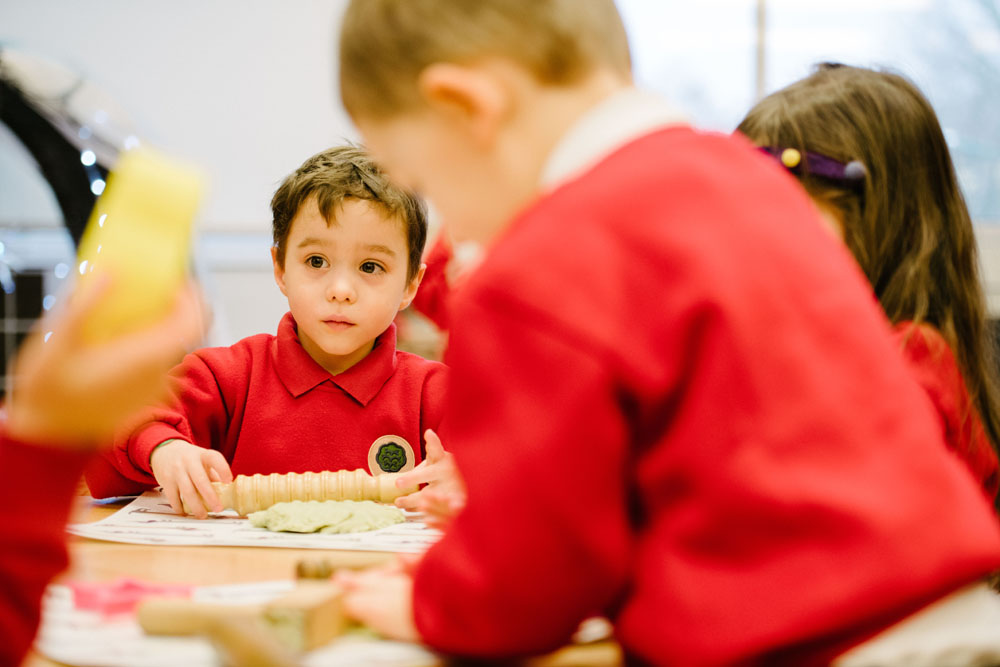
We recognise the importance of play in young children's learning and development. Our curriculum incorporates play-based learning experiences, where children can explore, imagine, problem-solve, and develop their creativity. Play provides children with opportunities to engage in child-initiated and adult-led activities that support their exploration and learning. In addition to play, direct teaching is an essential part of our approach. Through focused teaching sessions, we introduce new skills and concepts, ensuring that children have the necessary guidance to build on their play experiences. This balance between play and direct teaching ensures that children engage in both independent discovery and structured learning, supporting the development of core skills in a meaningful and enjoyable way.
4. Responsive and Individualised Learning
We know that every child is unique, and we take time to get to know their interests, strengths, and what helps them to learn best. Our staff carefully observe and support each child, making sure they are challenged at the right level. We adapt our teaching and activities to meet the needs of all children, including those who may need extra support, so that everyone can make progress and feel successful.
5. Language, Communication and Vocabulary Development
We place a strong emphasis on developing children's language and communication skills. Our curriculum provides rich opportunities for children to engage in conversations, storytelling, role-play, and language enrichment activities. Recognising that a wide and varied vocabulary is key to understanding and expressing thoughts, feelings, and ideas, we plan vocabulary explicitly throughout the curriculum. This is done by introducing new words in context during both direct teaching and play-based learning. Teachers use strategies such as repetition, modelling, and scaffolding to help children use and retain new words. Early literacy skills, including phonics, reading, and writing, are woven into these language-rich activities to ensure that children develop the confidence and skills necessary for effective communication. To support this, our team actively engages with children in the moment, offering repeated opportunities for them to revisit and practise newly learnt vocabulary across different contexts, helping them to consolidate their understanding.
6. Building Fluency Through Practise
Children build confidence and deepen their understanding through regular opportunities to revisit and practise what they’ve learnt. We plan carefully sequenced direct teaching sessions alongside rich opportunities for children to return to key concepts during continuous provision, both indoors and outdoors. Skilled practitioners support children in applying their knowledge in different ways, helping them consolidate their learning, build fluency over time, and develop strong foundations for future learning.
7. Assessment and Observation
In the Early Years, we believe that observation is a powerful tool to understand each child’s unique learning journey. Our staff carefully observe children’s interactions, play, and work to gain a deeper understanding of their development, interests, and needs. This informs our assessment process, which is continuous and responsive, allowing us to adapt teaching and provide targeted support. We use these insights to plan meaningful next steps, celebrate individual progress, and ensure all children are supported to achieve their full potential.
8. Outdoor and Active Learning
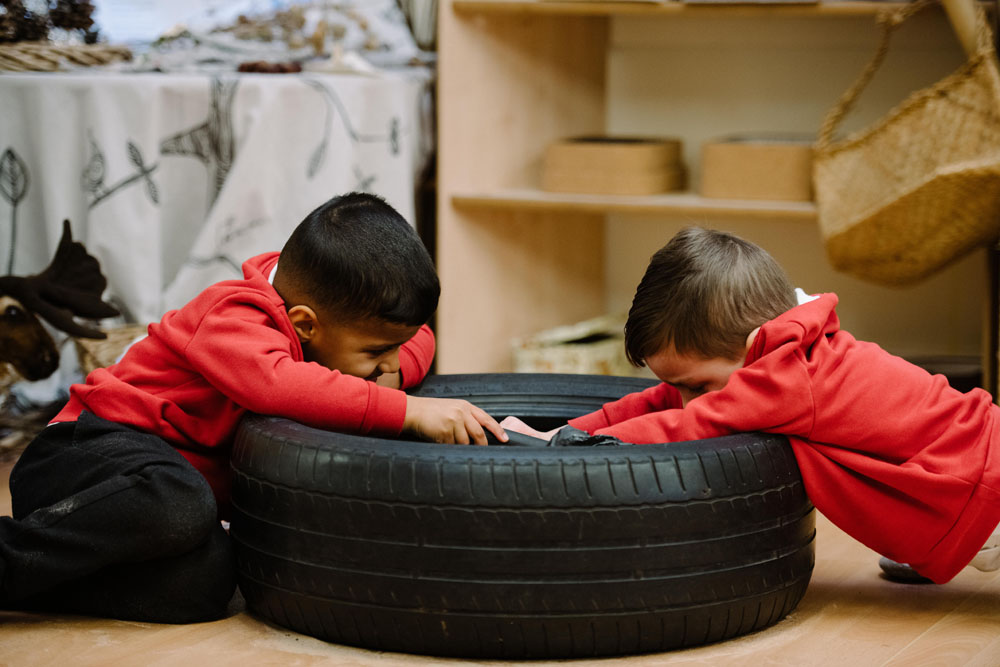
Our outdoor provision offers meaningful opportunities for physical development, exploration, and problem-solving. Children are encouraged to connect with nature, investigate the world around them, and develop teamwork and independence through hands-on experiences. All children also take part in weekly Forest School sessions, where they develop resilience, collaboration, and a deep respect for the natural world through purposeful outdoor learning and play.
9. Strong Partnerships with Parents
We recognise the vital role of parents and carers in children’s early learning and development. We believe that the strongest learning happens when home and school work together as a team. We encourage strong partnerships with parents through regular communication, parent-teacher meetings, and school events. We also involve parents in their child’s learning journey by providing opportunities for them to engage with school activities and celebrate milestones together.
10. Inclusion and Additional Needs
We are committed to providing an inclusive environment where all children, including those with additional needs, are fully supported to thrive. Our curriculum is designed to be flexible, ensuring that each child can access learning at their level.
We recognise and celebrate neurodiversity and difference, ensuring our environment and teaching approaches are inclusive, adaptive and respectful of every child’s unique way of learning.
We use personalised strategies, including tailored resources and interventions, to support the individual needs of all children. Our team works closely with families, external professionals, and other settings to ensure that every child feels included and can make progress in a supportive and responsive learning environment.
11. Developing Learning Behaviours Through Skilled Interactions
We understand that how children learn is just as important as what they learn. Our skilled practitioners play a vital role in supporting and extending children’s thinking through high-quality interactions and carefully planned opportunities. We nurture the Characteristics of Effective Learning - playing and exploring, active learning, and creating and thinking critically - by modelling learning behaviours, encouraging curiosity, and helping children to reflect on their ideas.
Through sensitive questioning and shared reflection, we develop children’s early metacognitive skills — helping them to think about how they learn, plan their approaches, and talk about the strategies that help them succeed.
Practitioners sensitively scaffold learning, enabling children to develop confidence in taking risks, persevering through challenges, and finding new ways to solve problems. These learning behaviours lay the foundation for positive attitudes to learning that last well beyond the Early Years.
This vision underpins all of our Early Years documents, including
- Curriculum Maps
- Learning Milestones
- Continuous Provision Plans
- Parent Information Booklets
- Online Padlet Learning
This ensures a consistent approach from intent to implementation and strong links between home and school.
We are committed to providing a strong start to our youngest pupils; no child is left to fall behind. Early reading skills are given high importance in order to ensure children can become successful and confident learners. We are passionate about creating a curriculum that builds upon prior learning and follows the interests of the children. This is achieved through carefully planned themes, play-based learning and by highly skilled practitioners that observe and extend children’s learning experiences.
The Early Years Curriculum (encompassing Nursery and Reception) is made up of seven areas of learning and development. These are divided into three prime areas and four specific areas.
The three prime areas are:
- Communication and Language
- Personal, social and emotional development
- Physical development
These are then supported by specific areas that strengthen the prime areas. The specific areas are:
- Literacy
- Mathematics
- Understanding the World
- Expressive Arts and Design
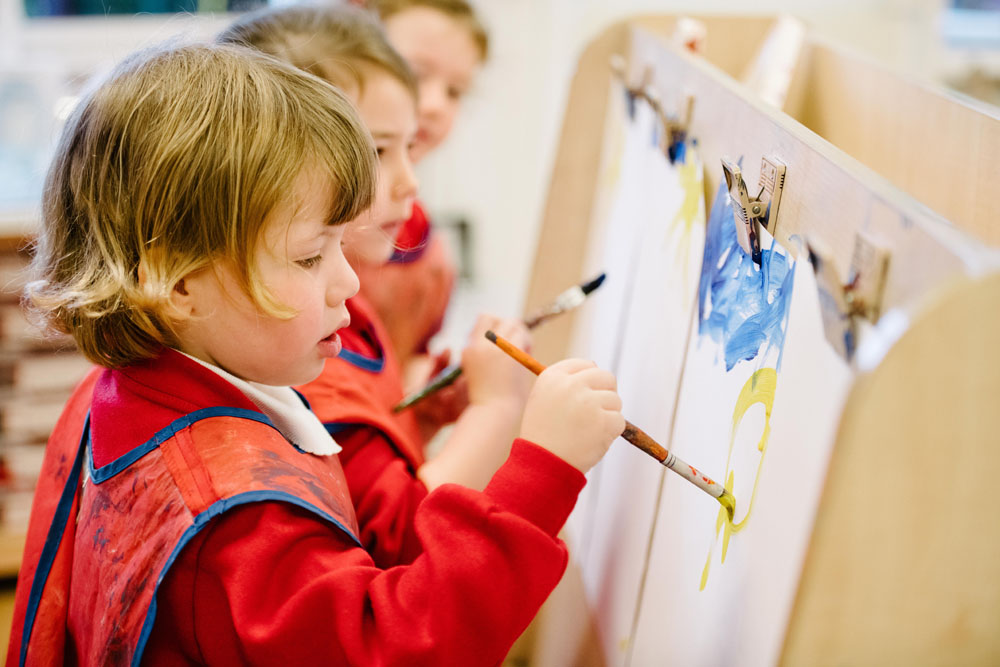
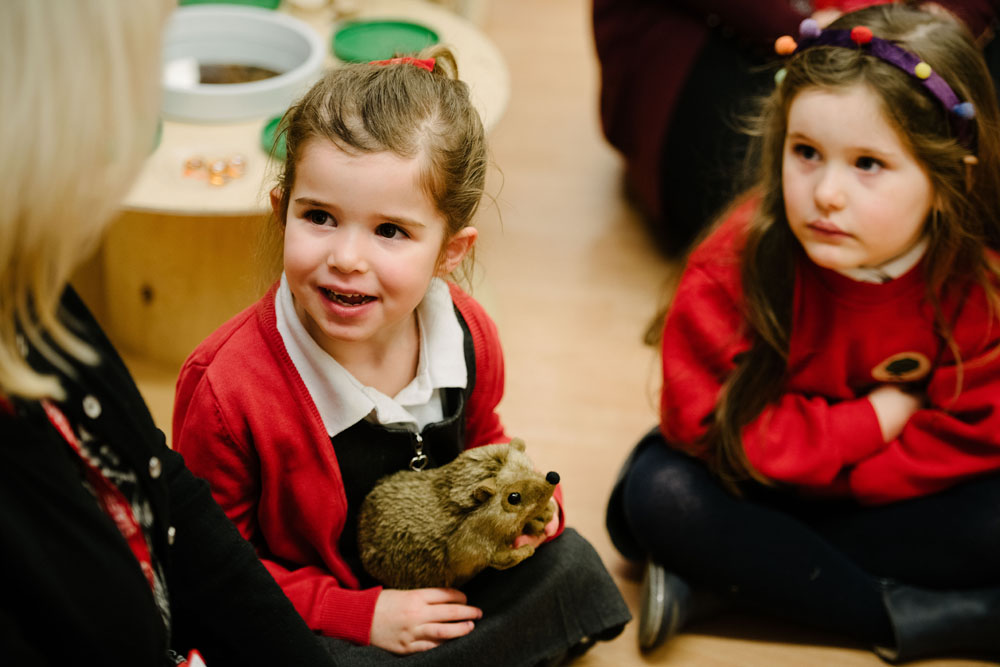
The Early Years Foundation Stage team quickly get to know the interests of individuals and groups of children and are quick to harness enthusiasm or learning in active and inspirational ways. Learning in the Early Years Foundation Stage is practical, purposeful, creatively linked, active and open-ended with visitors and visits enriching the curriculum regularly.
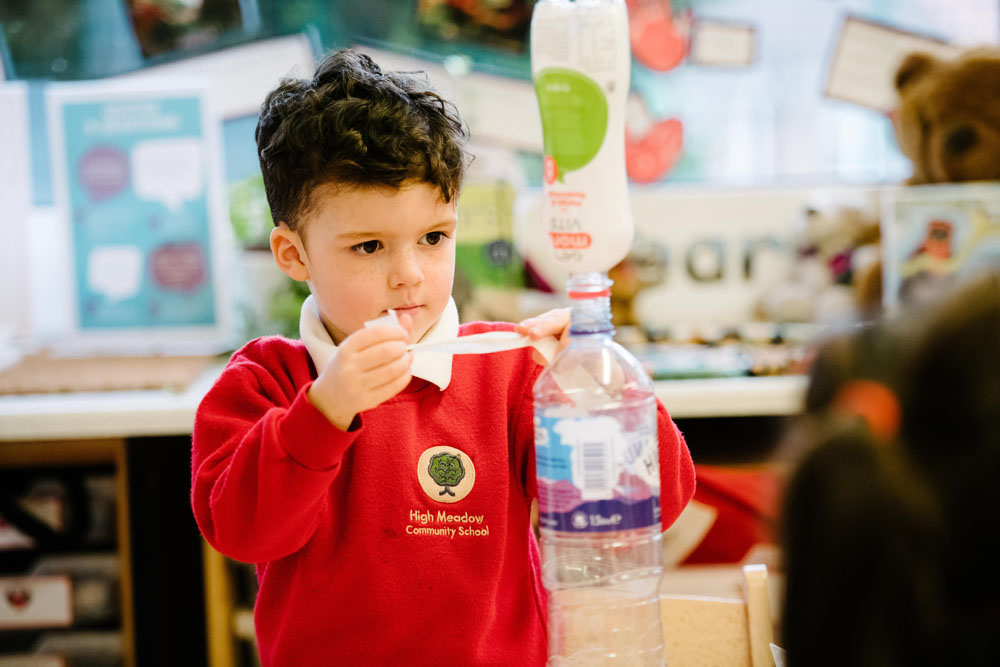
In our setting, a great deal of learning is initiated by the child and adults working alongside the children tirelessly to facilitate and help develop effective learning strategies such as:
- Being willing to have a go
- Being involved and concentrating
- Having their own ideas
- Choosing ways to do things
- Finding new ways
- Enjoying and achieving what they set out to do